









Managing HR across multiple countries becomes more complicated when each country uses a different payroll provider. Your HR team may maintain employee data in AFAS, while payroll is processed through separate local systems. A salary change, new employee or contract update may need to be entered or checked several times before payroll can be processed. How can organizations maintain a central HR system while continuing to work with local payroll providers?
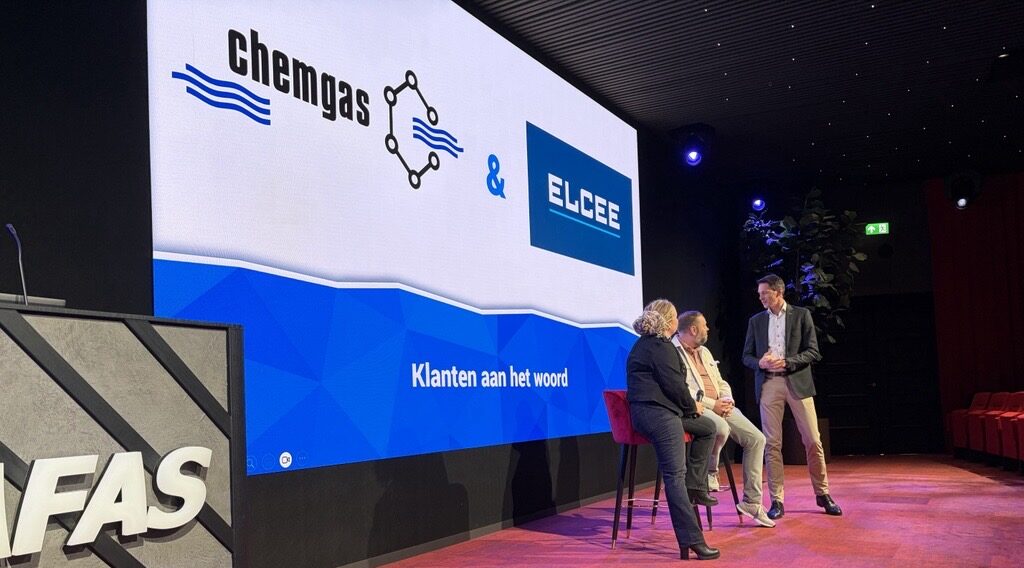
This was one of the challenges discussed at the AFAS International event on October 5, 2026. AFAS shared developments in its international HR functionality, while Salure explored the practical implications of connecting central HR processes with local payroll systems. The discussion reflects a broader challenge for international organizations: centralizing employee data is one step, but making that information available to local payroll providers requires reliable integrations.
Why international HR and payroll integration matters
As organizations expand internationally, their HR technology landscape often becomes more complicated. Headquarters may use AFAS as the central HR system, while local teams rely on different payroll providers. Employee changes are entered into multiple applications, spreadsheets move between departments and HR teams may struggle to establish which information is up to date.
A survey among respondents ahead of the AFAS International event highlighted these challenges:
- 80% reported a lack of centralized visibility into international HR data.
- 73% struggled with processes between countries.
- 73% still relied on manual processes, including spreadsheets.
These figures describe the event respondents rather than the wider market. They illustrate how differences between systems and local processes can create additional administrative work. Integrating HR and payroll applications can help reduce repeated data entry. Instead of manually transferring the same information between systems, organizations can establish defined data flows, with agreements about which information is exchanged, when it is transferred and who is responsible for checking it.
AFAS is expanding internationally: what changes for HR?
AFAS is developing its software to better support organizations operating across multiple countries, with Germany as an important initial market. Multilingual functionality is one area of development. AFAS Pocket and Profit 8 already support nine languages, while multilingual support for InSite and OutSite was presented as part of the Profit 9 roadmap. AFAS also outlined plans for country-specific HR functionality, including employee fields, documents and formatting based on applicable legislation. Further localization of leave and absence rules remains part of its longer-term plans.
These developments may make it easier for organizations to manage employee information and HR processes within a shared environment. However, local payroll requirements remain. Tax regulations, social security contributions and employment conditions differ by country, and many organizations already work with established local payroll providers. As a result, international HR management often involves a combination of central HR administration and local payroll processing. The systems need to exchange information, even when they serve different purposes.
Connecting AFAS with DATEV, Abacus and Zucchetti
Consider an organization that uses AFAS for central HR administration. Its German payroll team works with DATEV, its Swiss team uses Abacus and its Italian team relies on Zucchetti. These systems were among the examples discussed in the context of international payroll integrations. Each has its own requirements for employee information, payroll inputs and processing.
BrynQ supports integrations involving AFAS and payroll applications such as DATEV, Abacus and Zucchetti. However, support for individual applications does not necessarily mean that every combination is available as a preconfigured connection. The possible data flows and implementation requirements depend on the systems involved.
For example, when HR approves a salary adjustment in AFAS, the relevant information may need to be transferred to a local payroll provider. Depending on the integration, this can take place through an automated data exchange rather than a manual export. The local provider remains responsible for calculating and processing payroll according to national requirements. Information may also need to flow back to AFAS, such as payroll documents or journal entries. The main challenge is determining exactly which information each system needs, how it should be formatted and when it should be exchanged.

Central HR and local payroll: how hybrid payroll works
Organizations do not necessarily need to replace their local payroll providers when introducing a central HR system. In a hybrid payroll model, employee information is managed centrally while payroll is processed by different local providers. This allows organizations to maintain a consistent HR administration while accommodating country-specific payroll requirements.
Organizations can work with existing local payroll providers or select new partners based on their country-specific requirements. BrynQ helps connect these payroll systems with the central HR environment, enabling relevant employee and payroll data to be exchanged between systems. The available data flows depend on the providers involved and the integration setup.
The organization’s processes and each payroll provider’s capabilities determine how information is exchanged. Some integrations primarily transfer employee changes from HR to payroll. Others also support information flowing back into the HR system. An example shared during AFAS International involved a Luxembourg payroll provider. Employee information was transferred from AFAS for local processing, after which payslips were returned to AFAS. This illustrates how a two-way integration can work, although the same functionality is not necessarily available with every payroll provider.
The appropriate approach also depends on scale. A country with a small number of employees may have different requirements from one with a large workforce and frequent payroll changes.
Data validation and monitoring across payroll systems
Connecting systems does not automatically guarantee that every data exchange will be successful. Differences in required fields, data formats and processing schedules can still cause problems. For example, a local payroll provider may require an employee identifier that is not maintained in the same way in AFAS. A missing field or unexpected value could prevent the information from being processed correctly.
Data validation can help identify these issues before information reaches the payroll provider. Monitoring can provide visibility into whether transfers have been completed and which records require attention. Integration platforms such as BrynQ can support data exchange, validation and monitoring, depending on the configured integration. These functions are relevant when organizations need to coordinate multiple payroll systems without checking every transfer manually.
This is also part of global payroll orchestration: coordinating payroll activities, data delivery and responsibilities across countries while local providers continue to handle payroll execution.
Bringing international HR data together for reporting
International reporting becomes more difficult when employee information is distributed across different applications and countries. Questions about headcount, full-time equivalents or employee distribution may require data from several systems. When that information is collected manually, preparing a consolidated report can take considerable time.
Integrations can make relevant data available for reporting and analytics. However, connecting the systems is only part of the process. Organizations also need consistent definitions. For example, if countries calculate FTE differently or classify employees using different categories, combining their figures in one dashboard may produce misleading comparisons. A reliable international HR dashboard therefore depends on both accessible data and agreed reporting definitions.
Organizations can already gain international HR insights without waiting for further developments in AFAS. With BrynQ, data from different HR and payroll systems can be brought together and made available for reporting and analytics. Consistent reporting definitions help ensure that figures can be compared across countries.
How to get started with international HR and payroll integration
Before connecting systems, it helps to understand how employee information currently moves through the organization. Start by identifying the HR and payroll applications used in each country. Determine which system maintains the original employee data, which changes need to reach local payroll providers and where manual transfers are currently required.
Local payroll teams should be involved in this process. They can explain which fields their systems require, how frequently information needs to be delivered and which checks take place before payroll processing. Testing is particularly important when integrating systems across countries. Employee identifiers, date formats, contract information and payroll-related fields may differ between applications.
Organizations can choose to introduce integrations country by country or prepare several countries together. Both approaches have advantages, depending on the complexity of the systems and the available resources. Clear responsibilities and documented data flows make it easier to maintain the integrations as processes change or additional countries are added.
Frequently asked questions about AFAS and international payroll integration
Yes. AFAS can exchange employee information with international payroll systems through integrations. The available data flows depend on the systems involved and how the integration is configured.
BrynQ can connect AFAS with DATEV, enabling relevant employee data and salary changes to be transferred to the German payroll system. The exact data exchanged depends on the integration configuration and local payroll requirements.
BrynQ supports integrations involving applications such as AFAS, DATEV, Abacus and Zucchetti. The available capabilities and connections vary by system.
AFAS can serve as the central HR environment while local payroll providers process salaries in their respective countries. Integrations can transfer relevant employee and payroll information between these systems.
Hybrid payroll is an approach in which HR information is managed centrally while different local providers handle payroll processing. Organizations can maintain existing payroll partnerships while coordinating employee information through a shared HR environment.
Global payroll orchestration involves coordinating payroll activities across multiple countries, including data delivery, responsibilities, schedules and controls. Local providers may continue to handle the actual payroll calculations and processing.
Yes. A centralized HR environment does not automatically require replacing local payroll providers. Whether existing systems can be integrated depends on their technical capabilities and the organization’s requirements.
This is possible with certain integrations. An example discussed at AFAS International involved a Luxembourg payroll provider returning payslips to AFAS. The available functionality depends on the payroll system and integration setup.
Establish which system is responsible for maintaining each type of information and identify where data can be exchanged automatically. Clear validation rules help reduce inconsistencies between applications.
Monitoring can include checking whether scheduled transfers have completed, validating required fields and identifying records that could not be processed. The available options depend on the integration platform and configuration.
International HR reporting requires relevant data from different systems and consistent definitions for measures such as headcount and FTE. Integrations and analytics tools can help bring this information together.
Yes. Organizations can already develop international HR reporting using existing integrations and analytics solutions. BrynQ can help make data from different HR and payroll systems available for reporting.
Explore AFAS integration options
The right integration approach depends on your existing systems, local payroll requirements and the information that needs to move between them. For more information about the available options, see BrynQ’s AFAS integration overview.


