








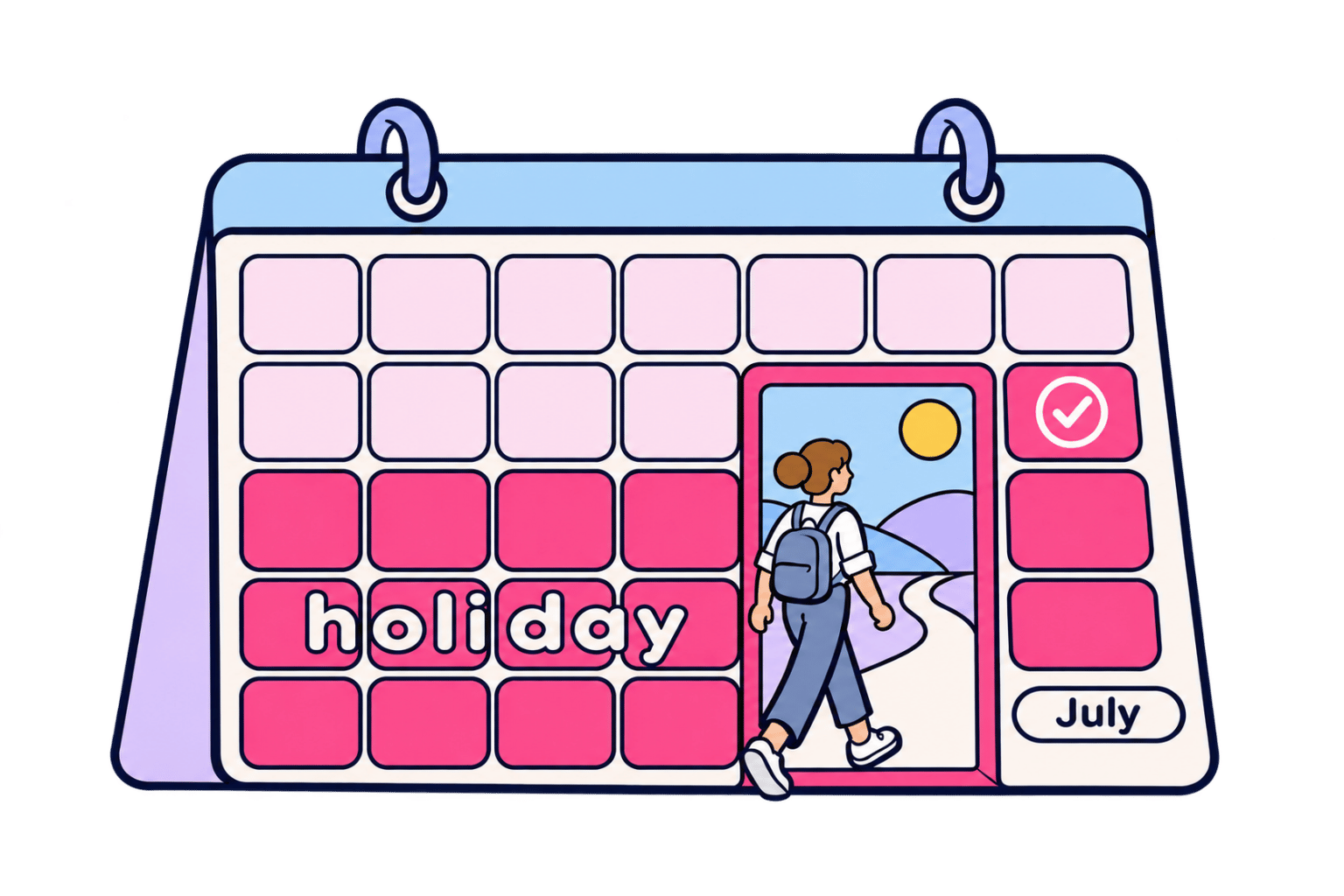
Annual leave means paid time off from work that you can take each year for holidays, rest, or personal reasons. It’s a key part of a well-rounded compensation package and an essential tool for maintaining work-life balance for both employee wellbeing and business performance. Yes, it is normally paid at your usual rate (or a fair average of it). You work it out from your contract or the legal minimum where you work, usually pro-rated if you are part-time or only employed for part of the year, then subtract days or hours already taken.
What is Annual Leave?
Annual leave is the legally or contractually granted paid time off an employee receives each year. It’s usually measured in days or hours and accrues over time, depending on the employment contract, company policy, and local labor laws. In many jurisdictions it is treated as a core employment right rather than a discretionary perk: employers are required to provide a minimum amount of paid leave, and employees are entitled to take that time without losing wages or suffering unfair retaliation.
What annual leave means
Annual leave (also called holiday leave, vacation leave, or annual holiday) is time away from work that builds up as part of your employment. It is separate from sick leave, parental leave, public holidays (in many places), and unpaid time off.
Employers grant it so people can rest without losing their job or their normal pay. Entitlement usually comes from:
- the law in your country or state, and/or
- your employment contract, award, or company policy (which can be more generous than the legal minimum, but not less).
You generally request dates in advance, and the employer can sometimes refuse specific dates for genuine business reasons, within the rules that apply to you. Unused leave may carry over, be capped, or be paid out when you leave. Again depending on local law and your contract.
Typical Annual Leave Entitlements by Country
Leave rules vary widely across the globe. Some countries mandate more generous policies than
others:
- Australia & New Zealand: 20 days minimum
- UK: 28 days (including public holidays)
- EU: At least 4 weeks
- Canada: 24 weeks depending on tenure
- USA: No federal minimum; leave is employer-driven
Is annual leave paid?
In most countries that require annual leave, it is paid. You should receive your normal pay for the time off, or a calculated equivalent if your hours or pay vary (for example, an average of recent earnings, sometimes including regular overtime or allowances). Some places also add a leave loading (an extra percentage on top of base pay).
It is not the same as unpaid leave. If your employer offers extra unpaid time off, that is separate and you are not paid for those days unless a policy says otherwise.
On resignation or dismissal, many jurisdictions require unused accrued annual leave to be paid out in your final pay. A few places allow “use it or lose it” only in limited circumstances, or restrict payout. Check your contract and local rules rather than assuming.
The United States is a major exception at federal level: there is no general legal right to paid vacation. Many US employers still offer paid time off (PTO) as a benefit, and some states regulate accrual and payout.
How Annual Leave Works
Annual leave accrual is most commonly based on hours worked and years of service. The longer someone’s been with the company, the more leave they typically earn.
Here are the most common methods:
- Accrual system: Employees earn leave gradually, usually per pay period.
- Lump-sum system: The full leave balance is given at the start of the year.
- Anniversary system: Leave is granted each work anniversary.
Some companies offer extra leave as a loyalty bonus after several years of service. For example,
U.S. federal employees earn:
- 4 hours per pay period (13 days/year) for 03 years of service
- 6 hours per pay period (20 days/year) for 315 years
- 8 hours per pay period (26 days/year) after 15+ years
Part-time workers earn leave on a pro-rated basis.
How to work out annual leave
1. Find your entitlement
Look at your contract, employee handbook, or the statutory minimum for your country. Common full-time benchmarks (illustrative, not a complete list):
- United Kingdom: 5.6 weeks paid leave per year (28 days if you work 5 days a week); bank holidays can be included in that total.
- European Union: at least 4 weeks paid annual leave under the Working Time Directive; many countries give more.
- Australia: generally 4 weeks per year for full-time employees (more for some shift workers), accruing progressively.
- New Zealand: 4 weeks.
- Canada: often starts at 2 weeks after a qualifying period and rises with service; rules are provincial.
- United States: no federal minimum; typical employer offers are often in the range of about 10–20 days, sometimes as combined PTO.
2. Pro-rate if you are not full-time or not there all year
- Part-time: scale by the fraction of a full-time schedule. Example: 4 weeks for a full-timer working 5 days becomes 2 weeks (10 days) if you work 2.5 days a week, or calculate in hours so it stays fair.
- Part-year (new starter or leaver): entitlement × (days or months employed ÷ full year), using the method your law or contract specifies. Accrual “as you go” is common, so you may not have the full year’s balance on day one.
3. Choose days or hours
Salaried Monday–Friday staff often count in days. Shift workers, casual, or variable-hours staff are often better in hours. A simple hours method used in some systems is:
leave hours accrued = hours worked × accrual rate.
In the UK, a widely used rate for irregular hours is about 12.07% of hours worked (because 5.6 weeks of leave relative to the rest of the working year is roughly that share). Your employer should use the legally correct method for your situation, not a rough guess.
4. Track what you have left
Balance = accrued entitlement − leave already taken − leave booked.
Example (simple full-time, 20 days a year, monthly accrual): after 6 months you have accrued 10 days; if you have taken 3, you have 7 left (plus any carried over from last year, if allowed).
5. Check pay for the days you take
Confirm whether holiday pay is basic salary only or includes averages of commission, overtime, or allowances. Payroll or HR should apply the rule that fits your pay pattern.
Use It or Lose It
In many regions, there’s a cap on how much unused leave can be carried into the next year. Anything above this is typically forfeited unless properly scheduled in advanceknown as “use or lose” leave.
Good practice: Encourage employees to take time off throughout the year to avoid burnout and avoid end-of-year scrambles.
Why Annual Leave Matters
Annual leave is more than a perk. It’s a performance and compliance essential:
- Reduces burnout and turnover
- Improves productivity and morale
- Supports legal compliance in countries with statutory leave rules
- Boosts employee satisfaction by promoting balance and autonomy
Smart Leave Management
Modern businesses integrate leave tracking with HR and payroll systems. This prevents miscalculations, automates accruals, and makes scheduling simple for everyone.
With BrynQs smart payroll integration, tracking annual leave is no longer a headache. Automate accruals, monitor balances, and sync usage across your systems in real time.
Let your people plan rest without stressand keep operations running smoothly.